A deep dive into Shockwave Therapy ⚡
Is it just me, or is January absolutely flying?
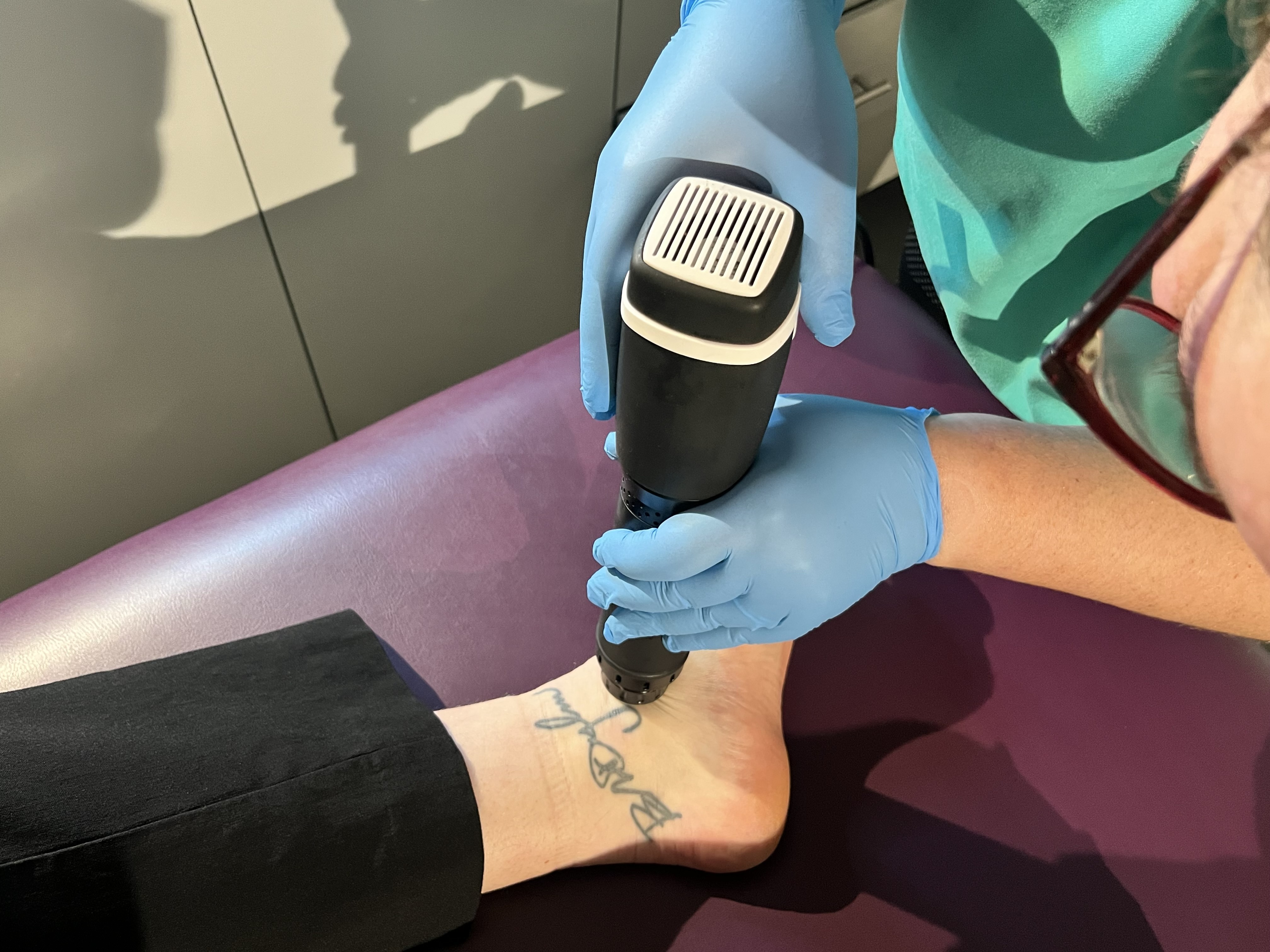
For me, January has taken me in several exciting directions – including a deep dive into the world of advanced Shockwave Therapy. This safe and non-invasive treatment widely used for tendon, and soft tissue, is gold standard when it comes to treating long standing foot and lower limb pain. Patients report decreased pain, increased movement, all leading to a better quality of life. It’s the best I could wish for as a passionate Podiatrist!
Conditions that can be helped with Shockwave Therapy
Plantar fasciitis (heel pain/fasciopathy)
A common cause of heel pain is damage to parts of the tissues on the bottom of the foot, resulting in pain and sometimes swelling. The band of tissue from your heel to your toes is your plantar fascia – so this pain is sometimes known as plantar fasciitis.
Heel pain often feels worst first thing in the morning or after rest and can limit walking, work and exercise. Early assessment helps prevent chronic pain and prolonged recovery.
Achilles tendinopathy (tendinitis)
Achilles tendinitis and tendinopathy refer to pain and degeneration affecting the Achilles tendon, which connects the calf muscles to the heel bone. This condition is commonly caused by overuse, sudden increases in activity, poor foot biomechanics or inadequate footwear. Symptoms may include pain, stiffness, swelling and tenderness, particularly first thing in the morning or during activity.
For me, January has taken me in several exciting directions – including a deep dive into the world of advanced Shockwave Therapy. This safe and non-invasive treatment widely used for tendon, and soft tissue, is gold standard when it comes to treating long standing foot and lower limb pain. Patients report decreased pain, increased movement, all leading to a better quality of life. It’s the best I could wish for as a passionate Podiatrist!
| Who can benefit from Shockwave Therapy? The healing of many and painful common foot conditions can be expedited with the help of Shockwave Therapy. First, an accurate diagnosis is essential. Here in the clinic, our Podiatrists can diagnose your condition and advise on reducing pain and restoring the tissues to their full health. Shockwave Therapy is an evidence-based treatment that can significantly reduce pain, stimulate tissue repair and cell growth, and accelerate healing. The most recent evidence suggests 4 sessions (scheduled close together) yield the best and fastest results. In addition we will ALWAYS offer advice on footwear, activities to avoid and which to increase (yes really!), along with useful advice on injury prevention and offloading the tissues with the addition of insoles and orthotics and of course strengthening drills when it’s time! |
Conditions that can be helped with Shockwave Therapy
Plantar fasciitis (heel pain/fasciopathy)
A common cause of heel pain is damage to parts of the tissues on the bottom of the foot, resulting in pain and sometimes swelling. The band of tissue from your heel to your toes is your plantar fascia – so this pain is sometimes known as plantar fasciitis.
Heel pain often feels worst first thing in the morning or after rest and can limit walking, work and exercise. Early assessment helps prevent chronic pain and prolonged recovery.
Achilles tendinopathy (tendinitis)
Achilles tendinitis and tendinopathy refer to pain and degeneration affecting the Achilles tendon, which connects the calf muscles to the heel bone. This condition is commonly caused by overuse, sudden increases in activity, poor foot biomechanics or inadequate footwear. Symptoms may include pain, stiffness, swelling and tenderness, particularly first thing in the morning or during activity.
Conditions that can be helped with Shockwave Therapy (continued)
Forefoot Pain
Forefoot pain refers to discomfort felt across the ball of the foot and toes and can have several underlying causes. Common conditions include Morton’s neuroma, where a nerve between the long toe bones becomes irritated or thickened; bursitis, which is inflammation of soft tissue between the metatarsal bones; joint synovitis affecting the ball of the foot; plantar plate injuries involving ligaments under the toes; and sesamoiditis, irritation of the small bones beneath the big toe.
Symptoms vary depending on the cause and may include aching, sharp or burning pain, tingling, numbness or the sensation of walking on a pebble. Pain may develop gradually with activity or footwear pressure, or come on suddenly following trauma, a trip or an increase in walking, running or hiking. Forefoot pain can significantly affect daily comfort, exercise and footwear choices if left untreated. Given the wide range of possible causes, accurate diagnosis is essential – so book with our Podiatry who will identify the cause.
Medial tibial stress syndrome (shin splints)
Shin splints cause pain along the inner edge of the shin bone and are commonly linked to repetitive impact activities such as running or brisk walking. They often develop due to overload, poor lower limb biomechanics or inadequate footwear, and can worsen with continued activity if not addressed early. A runner’s worst nightmare (and frequent foe) – and an ideal candidate for shockwave therapy.
Chronic musculoskeletal pain in the ankle and foot area
Chronic foot and ankle pain refers to ongoing discomfort that persists beyond normal healing times, often due to tendon overload, joint irritation or long-standing biomechanical strain. Pain may fluctuate with activity levels and can limit walking, exercise and daily comfort. Targeted treatment aims to reduce pain, restore movement and support long-term tissue health.
So what are you waiting for?
Here in the clinic, we understand what a pain in the foot any of these conditions can be - and if you're suffering from one, then you do too! Book your first Shockwave Therapy appointment online, and get ready to gallop into the year of the horse, leaving your pain in past.
Big love, Tracy
Podiatrist, Mother, Yorkshire Tea addict & Clinic Director
Forefoot Pain
Forefoot pain refers to discomfort felt across the ball of the foot and toes and can have several underlying causes. Common conditions include Morton’s neuroma, where a nerve between the long toe bones becomes irritated or thickened; bursitis, which is inflammation of soft tissue between the metatarsal bones; joint synovitis affecting the ball of the foot; plantar plate injuries involving ligaments under the toes; and sesamoiditis, irritation of the small bones beneath the big toe.
Symptoms vary depending on the cause and may include aching, sharp or burning pain, tingling, numbness or the sensation of walking on a pebble. Pain may develop gradually with activity or footwear pressure, or come on suddenly following trauma, a trip or an increase in walking, running or hiking. Forefoot pain can significantly affect daily comfort, exercise and footwear choices if left untreated. Given the wide range of possible causes, accurate diagnosis is essential – so book with our Podiatry who will identify the cause.
Medial tibial stress syndrome (shin splints)
Shin splints cause pain along the inner edge of the shin bone and are commonly linked to repetitive impact activities such as running or brisk walking. They often develop due to overload, poor lower limb biomechanics or inadequate footwear, and can worsen with continued activity if not addressed early. A runner’s worst nightmare (and frequent foe) – and an ideal candidate for shockwave therapy.
Chronic musculoskeletal pain in the ankle and foot area
Chronic foot and ankle pain refers to ongoing discomfort that persists beyond normal healing times, often due to tendon overload, joint irritation or long-standing biomechanical strain. Pain may fluctuate with activity levels and can limit walking, exercise and daily comfort. Targeted treatment aims to reduce pain, restore movement and support long-term tissue health.
So what are you waiting for?
Here in the clinic, we understand what a pain in the foot any of these conditions can be - and if you're suffering from one, then you do too! Book your first Shockwave Therapy appointment online, and get ready to gallop into the year of the horse, leaving your pain in past.
Big love, Tracy
Podiatrist, Mother, Yorkshire Tea addict & Clinic Director
 Posted on 22 January 2026